Sunday, August 31, 2014

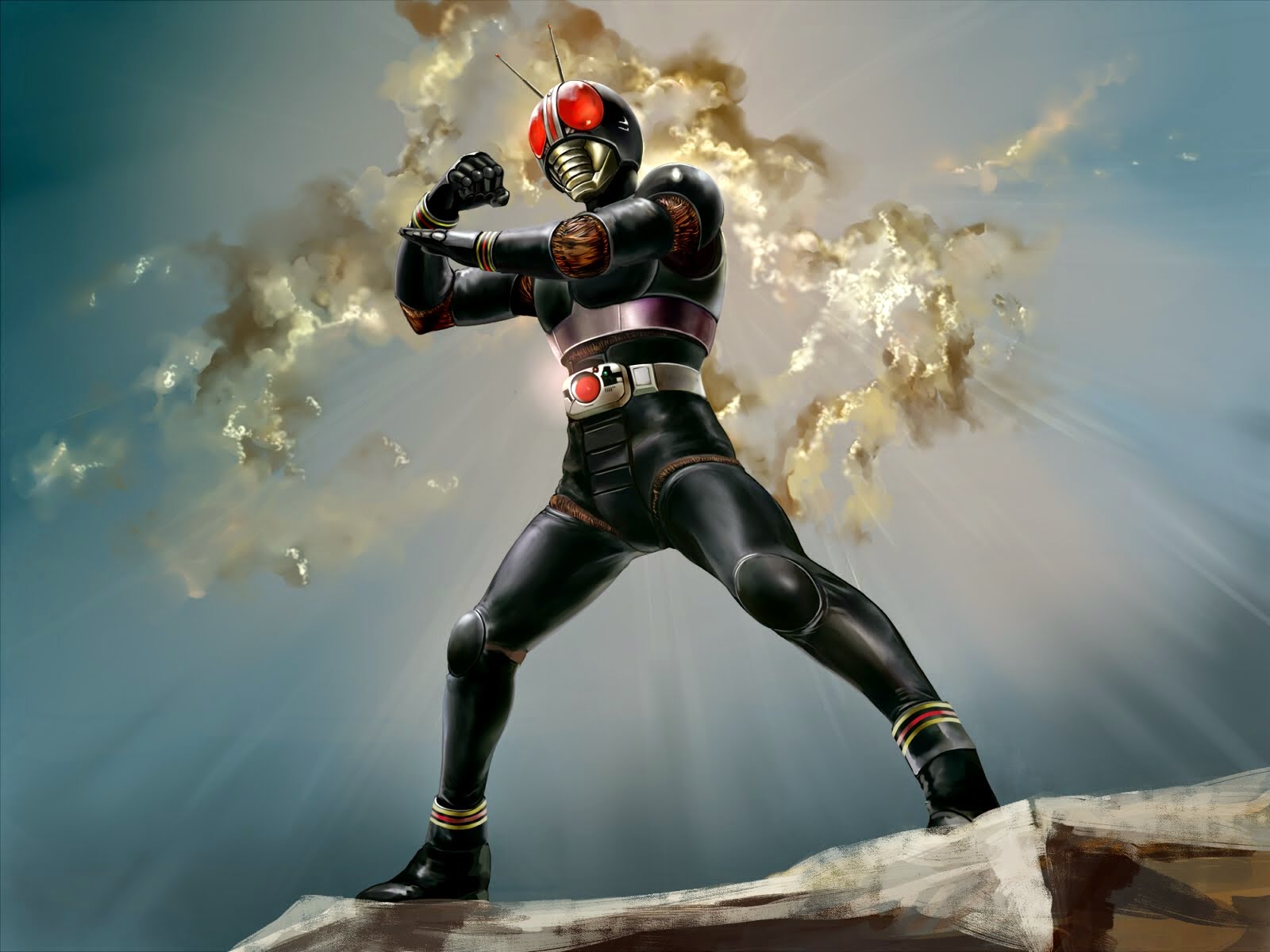
OSR extras (11) – Kamen Rider Black, rpg character sheet


(Warning:  The original post had a rant about life, since today is my birthday and I'm very grumpy during my birthday. But, because that had little to do with this gaming blog, I transferred it to my other blog. If you are curious to read the rant, just click here)

Since today is my birthday, I would like to post something special: Kamen Rider Black, a character from a show that helped shaping my way of seeing the world. I watched the show when I was very little, hardly understanding anything out of it – but the images clung on me, following me as I grew up. The show was dark, the hero oft had people betray him, walking alone and sacrificing himself for the Greater Good. The villains were perversions of life, aberrations created with evil intent by uncaring beings whose purpose solidified only in domination and profit. Nevertheless, the hero fought, besides the unbelievable odds against him and inevitable failure.

Well, here are the stats for him:


Kotaro Minami, the Kamen Rider Black

HD 8, or 48 hp
At 10 [+10], 2 martial arts attacks for 2d6 damage each
AC 0 [20]
SV 8+
All Neutral Good
Xp 4.000

Observation: In his normal human form, Kotaro has only 1 HD, 4 hp, At 19 [+1], damage 1d6, AC 10 [0], SV 18+ and XP 10.

Introduction: Kotaro Minami was taken by the evil Gorgom cult, transformed into an insect-cyborg and infused with the Black Sun Kingstone (the belt at his waist). However, instead of following the Gorgom's plans and become one of the Century Kings – together with his stepbrother, Nabuhiko, also taken by the Gorgoms – he was able to escape. Now, being able to transform into Kamen Rider Black, Kotaro hopes in rescuing his stepbrother while fighting against the Gorgom's monster army.

- Special attacks:

. Rider Punch: A special energy punch that Black can deliver. Works as a normal attack, unless the creature is below 1/ 2 maximum hp. Then, it must make a saving throw against Death or be destroyed.

. Rider Kick: A special energy kick that Black can deliver. It functions as a normal attack. However, if the creature is below 1/ 4 maximum hp, it must make a saving throw against Death with -4 penalty of be destroyed.

. Kingstone Flash: A very powerful energy surge that can be unleashed by his Kingstone. It makes any creature with 30 HD or less to back up in fear for 1d4 turns, allowing Black to catch up his breath and recuperate. Can be used only once per encounter.

- Special Defenses:

. Multi-eye: His special eyes enable him to see in the dark and also find weakspots in an enemy. If Kamen Rider awaits a whole turn analysing an enemy, his next attack, if hits, will be critical (or 3x damage if it also gets a natural 20).

. Sensoring ears: The triangles on the side of her head are very sensitive ears, enabling him super human hearing.

. Rider Sensor: The antennae on his head gives him another senses, allowing him to perceive enemies too fast or hidden.

. Power Stripes: The stripes on his neck and wrists may blow to protect him from any kind of movement restrainment, be it magical or not. Kamen Rider black acts as if in the effect of a Freedom spell.


Well, I hope you folks liked this. Kamen Rider Black is one very important show for me. Anyway, as my classes at the university resume and I go searching for a job, I don't believe I will be able to continue writing here daily – maybe once or twice a week, I don't know. It's been good doing so and was an interesting experience, I should say. See you people soon.

Until next time,
Valete!

Image 1

If you liked this post, you may help me improve by sharing it in your social networks. Also, if you are curious, give it a look at my music and literary blog. If you like my work, consider becoming my patreon.


Saturday, August 30, 2014

OSR Extras (10) - Zaheer, from Legend of Korra Book 3, rpg character sheet


SPOILERS ALERT– there will be spoilers in this post about Legend of Korra Book 3. If you did not see until the Episode 11 of the Book 3, then you might want to ignore this post for now.
------------------------------------------------------------------------------------------------

There are some great cartoons nowadays – cartoons that create incredibly dense stories, with interesting characters and an art style to match. One of those is the Avatar series – both Aang and Korra. Although Korra have had many problems compared with Aang – specially because the episodes seem, in general, rushed – it is, still, one of the greatest shows to grace TV nowadays and, in my opinion, one of the greatest animated series of all time.

So, today I will bring you the main villain for Korra Book 3 – Zaheer. Before you venture forth, let me tell you that there will be spoilers in his character sheet. So, beware. As always, outside brackets is Old, inside is New.

Zaheer, the one with the void, human fighter 9

HD 9, or 54 HP
At 11 [+9], 2 martial arts attacks for 1d6 damage each (look more at Air Attacks)
AC 7 [13], or -2 [22], look more at 'Great Dodge'
SV 8+, look more at Great Evasion
All Chaotic neutral
XP 5.000

Special:

Mastermind: Zaheer is considered one of the most dangerous persons in the world – even before he got his airbending. The GM is free to invoke impossible escapades and improbable allies appearing wherever Zaheer as in the scene. Also, Zaheer is almost never surprised.

'Enter the Void': Zaheer, after the Harmonic Convergence, became an Airbender. Not only that but, through intense mental training, meditation and control over his body, he attained a state of mastery unmatched in centuries, unlocking the ability to Fly at will and with perfection. However, he is not able to carry much more than his own weight while flying.

Air Attacks: Every time Zaheer strikes, after the attack roll, the target must also make a saving throw against breath weapons/Reflexes, even if the attack missed. If the target fails, it is now prone - losing its action for the turn if not yet acted, or acting last in the next round. If it was successfully attack, then double the damage received – if it was a critical (2x damage), then make it triple damage (3x).

Improved Initiative: Zaheer's keen reflexes and mental acuity allows him to always be the first one to act in a combat round – although extraordinary situations might take it away from him (GM's decision).

Great Evasion: Zaheer can evade impossible attacks. If any attack asks for a saving throw and Zaheer has space for moving around, if Zaheer succeeds, the attack causes no damage instead of half damage. And, even if he fails, he takes only half damage.

Great Dodge: Zaheer is agile beyond imagining. If he is in a place he is free to move around, his AC is -2 [22]. Also, if needed to run away, Zaheer is almost impossible to be stopped from running.

Combat: Zaheer will always try the best tactics possible. He will defeat weak opponents first, he will use hostages as meat shields, he will run if he has to run. When attacking, he will try using his Air Attacks against the strongest melee opponents in order to disable their attacks before they can act.

I hope you guys liked him. He is one of my favorite villains – since I kind of study budhism and taoism and, therefore, I can correlate with some of Zaheer's ideals and state of minds. He is a very powerful foe to use in any campaign, specially because he is a great planner with a chaotic nature to boost his plans. He can easily kill a whole party of adventurers if they are not prepared.

Until next time,
Valete!

Image 1

If you liked this post, you may help me improve by sharing it in your social networks. Also, if you are curious, give it a look at my music and literary blog. If you like my work, consider becoming my patreon.


Friday, August 29, 2014

OSR extras (9) – Double Handling, Dual-wielding and Focus tactics, new rules


I would like to present some nifty and simple tactics to be used in OSR games. They are very easy to implement and may give some flavor and variety to attacks.

Double Handling (Full-force attacks): Very common in many games (like Dark Souls), double handling means using two hands instead of one when using a weapon, augmenting its damage output. In mechanical terms, when double handling, your attack suffers -2 penalty, but increase the size of the damage die by 1. So, a dagger (d4) would cause d6 damage, a short-sword would cause 1d8 damage and a long-sword would cause 1d10 damage. Weapons that are naturally two-handed could also be 'double-handled', although what this means is that the user would attack with 'full-force', increasing the dice damage (a great sword would deal 1d12 damage instead of 1d10, fro example).

Dual Wielding: I would like to present some slightly different rules from the main book for dual-wielding. In real life, dual-wielding was an odd style, mostly used in special situations, normally duels and probably never in real army combat. The second weapon functioned also principally as a form of 'shield' instead of a second form of attack. The nature of dual wielding makes effectively using the weapon extremely hard and, specially if the weapons are both big or of the same size. So, to emulate those characteristics in your game, dual wielding function as a shield, giving +1 AC, but you receive a penalty in your attack depending on the size of the weapon used in your off-hand (so, a tiny weapon give 0 penalty, a small gives -1, a medium -2 and a great weapon giver -4). Besides that, if you want to attack with both weapons in a turn, the main-hand weapon receives another -2 penalty and the off-hand weapon receives -2. So, if you are using a small sword in your off-hand, you naturally receives -1 to attack. If you want to attack with both weapons, you will receive -3 in your main hand and -5 in your off-hand.

Focused Attacks: Waiting for striking the right place in order to deliver a critical strike. With that tactic, you suffer -2 to your attack, but increase the critical margin by 1 (normally, this means that the hit is critical on either 19 or 20 instead of only 20) and the damage multiplier by 1 (so, it's 3x damage instead of 2x). This tactic can be used to either ranged or melee attacks.

Weapon proficiency: If you are using the skill rules for weapon proficiency, a character that puts a point in any of those tactics will receive +2 to using them. So, focus and force attacks will have no penalty, for example.

So, what you folks think? I like giving options to my players attacks so everything don't fall into the boring 'I attack' action. I will be posting more tactics eventually.

Until next time,
Valete!


Images 1, 2

If you liked this post, you may help me improve by sharing it in your social networks. Also, if you are curious, give it a look at my others works and consider becoming my patreon.


Thursday, August 28, 2014

OSR Extra (8,5) - More about Shields and Blocking, rules


I was surprised in my last post that many people discussed  and commented in the rpg groups about their ideas of using shields and blocking. Since many of those ideas were very interesting, I wanted to present them here in the blog in a concise way and see what you folks think.

Option 1, Bonus to AC and Saving throw: This was the option people talked the most - instead of having another roll for blocking (which would slow the game), have the bonus be applied to AC (+1 Bucklers, +2 Small, +3 Medium, +4 Big) and also to relevant Savint Throws (like, for example, using a shield to block the fire from a dragon's breath or a fireball). This option is faster than rolling for block to every and each attack and I liked it very much. However, some said that the AC bonus should be lower (Bucklers and Small shield +0, Medium and Big shields +1), but the Saving Throw bonus apply normally. That is a rule to playtest and I would be interested in knowing what you folks find of it.

Option 2, Random bonus to AC: Proposed by Lucas in the PT version of the blog, to reflect the nature of blocking one could roll 1d4 for small shields, 1d6 for medium and 1d8 for big and add the number to their AC. That is similar to the rules I said in my last post, but I think it to be too random in the AC department. Nevertheless, an interesting idea to share.

Option 3, 'Combat Options': The AD&D book of combat options gives a lot of possibilities for shields, but most of them are related to spending the action in blocking and whatnots. It is a very interesting read, but I personally don't like it. I prefer 'automatic' and 'always active' effects instead of having to declare your action of blocking. But it is a very interesting read and anyone curious should take a look on it.

Option 4, 'Cover': Shields would offer a cover percentage relative to how much of the body they cover (Bucklers 10%, Small Shields 20%, Medium Shields 50%, Big Shields 75%). Every time it seems that the Shield could block an attack, the GM may roll the cover and, if lower or equal, then the attack fails. Melee attacks reduce the cover to half its normal value.

<<>>

Those were the options to the 'Blocking with Shields'. However, besides that there are also extras that you can apply to every option. 

Extra 1, Shields and Attacking: Using shields greatly hampers one's ability to fight. So, if you apply this extra to one of the options, reduce the user Attack by 1 per level of the shield (so, a buckler would reduce an attack in -1, a medium shield in -3 etc.).

Extra 2, Big creatures and attacks from behind: If a creature is too big, blocking is useless (GM's call for when a creature is too big). If the character is surrounded by many foes, those that surpass the shield (attacking from behind or flanking where the shield does not protect) will not suffer the block effect. That should not be something hard to deal with - no need for a combat grid. Just use common sense, like when the character is surrounded by goblins, some of the goblins will just get through the shield.


'Turtle Formation'
Extra 3, 'Turtle Formation' and hiding behind a shield or barrier: If you are hiding behind an object, you should apply the 'Cover' rules mentioned above, with a percentile chance of the attack being intercepted. Just have the attack be made against you normally and, if it goes beyond your AC, have an approximate value of how much of the body is vulnerable and roll a percentile die. For example, in a turtle formation, you'd have only 10% of your body exposed (the low part of your ankles and the gaps between the shields). This makes very hard for archers to hit well protected and trainned warriors. 

And that is it, folks. This is what was discussed in the many groups, both in PT and EN. I hope yall liked it and, if you use any of those options, tell me how did they fare in your game. I'm specially curious with Option 1 and 4 and I hope to test them myself.

Until next time,
Valete!

Images 123

If you liked this post, you may help me improve by sharing it in your social networks. Also, if you are curious, give it a look at my others works and consider becoming my patreon.

Tuesday, August 26, 2014

OSR extras (8) - Shield and Blocking, new rules


One of the things that I never liked much in Old School combat is the way Shields are treated. In our world, shields were always extremely important in the ancient battle field, since skirmishing was a very common practice. The armies would trade projectile shots - stones, javelins, arrows - and a single hit on the knee or the head could be enough to take a warrior out. Therefore, shield were very important to impede or halt such conecting projectiles and, not only ranged attack, but melee attacks could also be averted by the proper usage of shields - and I'm not even talking about special tactics, like the turtle formation or the hoplite stance!

But in Old School systems, normally shields make only a very small impact, giving +1 AC for melee combat and +2 for ranged. Such defense does not reflect the way that shields were used in real combat. However, there is a very special old english rpg named Dragon Warrior that had some very interesting rules for shields and, inspired by it, I will discuss now some new rules for Shields and Blocking in OSR systems.

Shields would no longer give bonus to AC, but would have a Block Value. Bucklers would have 1, Small shields 2, Medium Shields 3 and Big Shields 4. Every time  an attack against a warrior using a shield hits through the AC, then the attacking creature should try rolling higher than the block value of the shield. If it is a ranged attack, the attacker rolls 1d6, if it is melee, roll 1d8. If it the roll fails, then the attack causes no damage.

And, although historically people did not use two shields (at least I don't know of it), we may accept something like that in a heroic fantasy game. So, if someone is using two shields, all attackers must roll two times against the block value - once for each shield - and be successful in both in order to damage the opponent.

Remorhazes are awesome!
If the attacking creature is big or too strong, then it rolls 1d12 against the Block Value. If the creature is gigantic (2 size categories bigger) or extremely strong, then blocking is impossible. So, an ogre attacking a warrior would roll 1d12 against the shield's Block Value, but a Remorhaz would just ignore it. However, if the warrior has some magical mean to improve his strength - like a Belt of Hill Giant Strength - then the GM might allow a block chance.


Blocking a fire strike
with a Shield
For different attacks, like rays of frost, fire strikes and whatnots, the GM may allow a block roll too, in the same way as per other attacks, choosing a die size relevant for the situation (a giant flame strike would roll 1d12 agains the Bloc Value, for example). In the end, I hope you guys liked those ideas. I find them more interesting than just adding +1 to AC. It gives the shield a character in itself, and I find more fun this way.

In Resume:

. Shields have a blocking value, from 1 to 4 depending on the shield's size. Any attacker that hits through the character AC will have to roll higher than the block value in order to cause damage.

. The harder it is to block the attack, the bigger the die size is. For normal projectiles (arrows, darts), the attacker rolls 1d6. For melee attacks, 1d8. For big boulders, attacks from big creatures or magical strikes, 1d12. If the attacker is too big, strong, or attacking from behind, it is not possible to be blocked.

Until next time,
Valete!

Images 123

PS: The die size idea was given by Rodolfo from the Old Dragon brazillian facebook rpg group


If you liked this post, you may help me improve by sharing it in your social networks. Also, if you are curious, give it a look at my others works and consider becoming my patreon.

Monday, August 25, 2014

OSR Extras (7) – Ryu of Street Fighter II, rpg character sheet


I find street fighter, specially Street Fighter II, to be the quintessential fighting game – even beyond Tekken and Mortal Kombat. The fighting mechanics of the game were simple, direct and awesome. Till today people play that game and go on tournaments against one another. So, I'd like to bring today the stats for the most iconic character in Street Fighter: Ryu. As always, outside is Old School, inside is New School.

Ryu, Human Fighter 8

HD 8, or 50 hp
AT 12 [+8], 2 punches 2d4 each or 1 kick 2d6; or special attacks (see below)
AC 5 [15]
SV 10+
AL Lawful Good
XP 2.000

Special attacks: Ryu has some techniques that he may use while fighting. To invoke those techniques, after rolling the damage, you may also make a Saving Throw. If successful, the attack causes more damage - if a failure, the attack causes no damage. His special attacks are Shoryuken, Haduken

. Shoryuken (rising punch): While attacking with his punches, before rolling for damage, Ryu may make a saving throw. If he is successful, double the damage caused. 

. Tatsumaki senpuu kyaku (helicopter kick): When using his Kick attack, Ryu may make a saving throw. If successful, Ryu may either cause damage to everyone near him or cause triple damage to one opponent.

. Haduken: Instead of using his normal attacks, Ryu may use a long ranged energy attack (haduken) with At 10 [+10] and 1d12 damage. This attack does not need a saving throw from Ryu to be activated.

Those stats reflect Ryu during Street Fighter II, so he is not yet as powerful as he will be in other iterations of the game. I find it funny how people say that Old School rpgs are limited – well, I don't think so. I believe that, knowing what to change and how, you can play any game with it – even a Street Fighter one. But that is something to talk another day.

Until then,

Valete!

Image 1

If you liked this post, you may help me improve by sharing it in your social networks. Also, if you are curious, give it a look at my others works and consider becoming my patreon.


Sunday, August 24, 2014

Dark Souls OSR Tabletop rpg (3) – Combat Mechanics: Defense rolls


Dark Souls OSR project: Part 0, Part 1, Part 2, Part 3

Today we talk about one of the most important aspects of Dark Souls – Combat. Maybe the hardest aspect to translate from the electronic game to a tabletop rpg, the combat in Dark souls is skill based. The better the player, the better the chances of the character surviving. So much in fact that there are players able to finish Dark Souls almost without leveling up their characters stats or equipment. But an rpg is made – normally – with random numbers and, if your character stats are bad, no matter how 'good' you understand one system, you will probably still die.

Although it is possible to try emulating skill through a game (for example, Chess is a game based entirely on a person's skill), the main objective here will be trying to translate the 'feel' of Dark Souls. In Dark Souls, you always feel like your way of playing and reacting affect the game – how could we do something similar in a tabletop rpg?

Thus I introduce the 'Defense Rolls'. There are 6 types of defense rolls, one for each main attribute:

. Strength defense: Pushing, Trampling, Smashing.
. Dexterity defense: Dodging, rolling, evading.
. Constitution defense: Resisting, interposing, absorbing attacks.
. Inteligence defense: Foretelling, Feinting, fe
. Wisdom defense: Perceiving, acting on instincts.
. Charisma defense: Intimidating, Luck.

Besides the Saving Throws values, a character would have also Defense values. If you are playing with a classic OSR class, every one of their defense rolls will start at 15 at first level and receive +1 after each even level (so, +1 at level 2, +2 at level 4 etc), and will also receive +1 if the attribute is 13-15, +2 if it is 16 or 17, and +3 if 18. If you are playing with the 'Chosen Undead' special class, then your Defense starts at 20+ and depends entirely on your improved attribute modifiers.

In a manner similar to Saving Throws, defense rolls are defensive maneuvers a character may use wherever it seems plausible for him do to so. Wherever a player receives damage, he may narrate how he would defend from it and roll against the appropriate defense value. If successful, the damage is halved and; if it is a failure, the damage received is doubled. If the damage source already needed a saving throw, then either it is not possible to make a defense roll, or the damage will be nullified if both actions are successful – the GM must decide.

For example, let's suppose your 2 nd level fighter is attacked by a giant rat that hits for 20 damage – enough to kill him at that moment. You then say that the fighter will push the rat back using strength in order to defend from it, but the GM that is not possible – the rat is too big for that. So, instead, the player says that he will try absorbing the attack and Defense roll with constitution. He has Con 14, which gives him a Constitution Defense of 13 (+1 being level 2, +1 constitution modifier). He rolls a 11 – a failure – so the damage is doubled and the character dies, reviving later in the bonfire.

In another time, the same fighter is attacked by a pyromancer's fireball, receiving 30 damage. The attack naturally allows for a saving throw, which the character succeeds, halving the damage to 15. However, he wants to negate the damage – so, he tries rolling. Sadly, the fighter fails and the damage goes back to 30 – killing him again.

And that is the idea with Defense Rolls: the characters are able to narrate how they would defend against an attack and may have some control over what happen to their character. And many different monsters will have different modifiers for each kind of defense, which will give some tactical density for the players to know what kind of monsters they are attacking. But I will explain that in future parts.

Until then,

Valete!

If you liked this post, you may help me improve by sharing it in your social networks. Also, if you are curious, give it a look at my others works and consider becoming my patreon.