Showing posts with label Rpg. Show all posts

Tuesday, September 2, 2014

Rpg Reflections - Why do rpg systems make fighters boring?


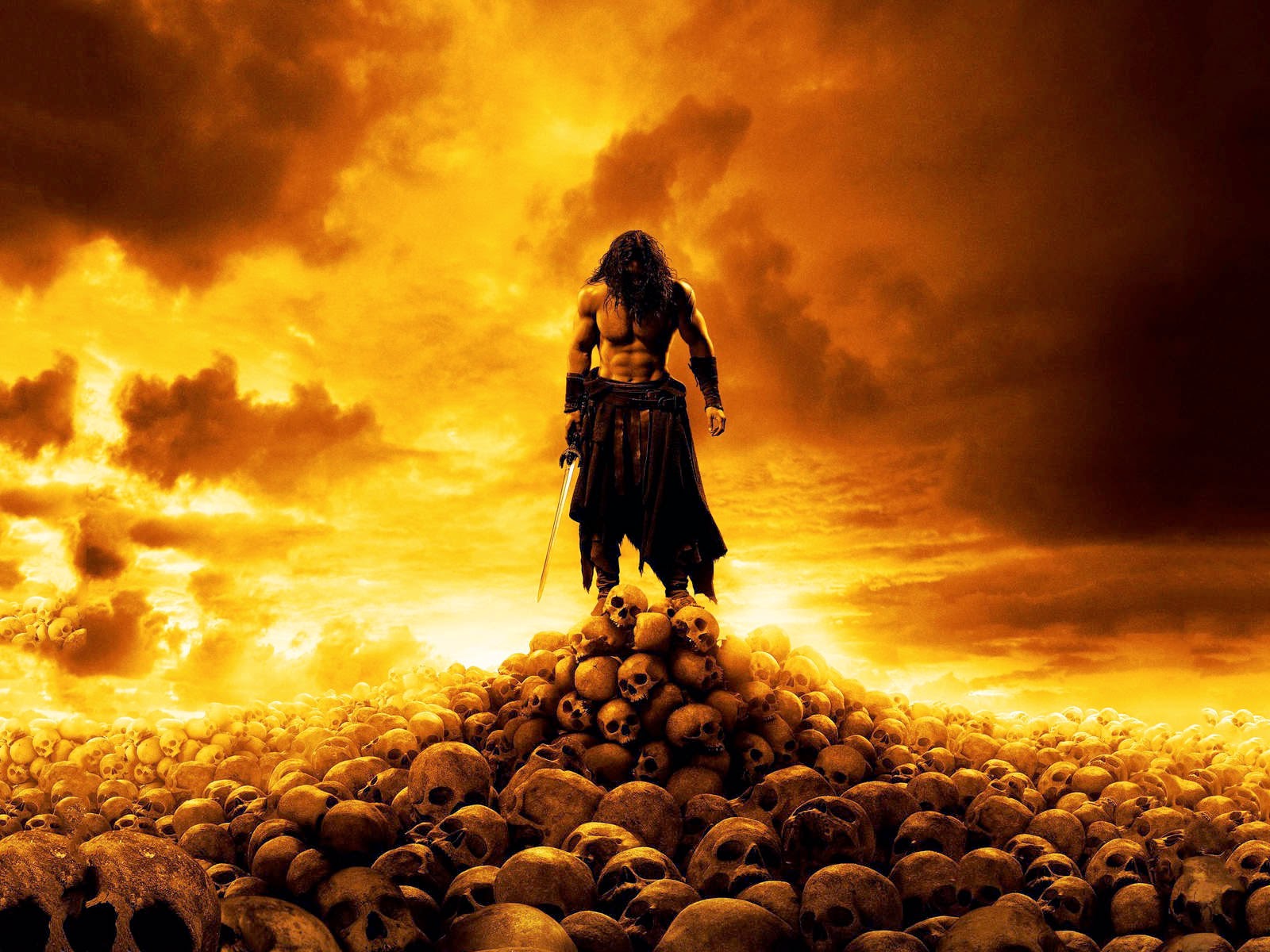
Warriors and Fighters are awesome. They are the quintessential hero of fantasy and mythology, doing feats of extraordinary skill and prowess in the battlefield. In mythology, we have the likes of Heracles, who strangled the Nemean lion; or Bellerophon, who, flying mounted at Pegasus, defeated the Chimera; or the god Susanoo, who fought in a titanic struggle against the giant snake Orochi. In modern fiction, few warriors of fantasy can have a greater fame than Conan, the cimmerian barbarian who fought innumerable foes; but, going beyond sword and sorcery, we may see the Jedi Knights from Star Wars, and also behold the many super heroes comix, filled with great martial artists and fighters – like Batman, Daredevil, Wonder Woman and many others.

And why are warriors awesome? I believe because they touch that primal beat in all of us, the instinct of fighting, of getting on our feet and standing tall against opposition. They fight with steel, flesh, fists and bones, bleeding as they claw their way through their many foes. They may use strength – like Samson – cunning – like Ulysses – or incredible agility – like Zorro – but they take hold of the battlefield with their skill.

However, those amazing stunts and incredible maneuvers are not what normally happen in most rpgs. In fact, playing warriors in most rpgs resume to saying 'I attack' and rolling the dice to see if the enemy was hit and then roll some damage. At most, a player might be allowed to 'try' doing amazing stuff as a fighter, but those actions are just 'mechanical'. If you try doing some awesome thing like swinging down a chandelier while doing a back flip, landing at a table, then spout a quirky line and kick the bad guy to a fireplace, you will probably – in most rpg games – have a ton of penalties to your attack roll. So, instead of doing something awesome, you just stick to the 'boring' basic action and say 'I attack'.

Even D&D (and the OSR systems) – which is a rpg game that tries simulating heroic fantasy and sword and sorcery – doesn't treat warriors very well. Old School D&D have some abstract notions in combat (Rounds are very long time wise, attacks and defenses allow for some open ended narration of strikes), which allow some space for roleplaying. However, there are no encouragements for players to narrate their attacks, because it all boils down to the attack roll against AC, with little to no variation. And new school D&D (3 rd and 4 th editions) may even be worse, because they made every aspect of combat very deterministic. Combat rounds have a very strict set time, each attack represent one strike, everyone has specific actions that can be done, be them attacks or move actions. All those specifics focus much more on the 'game' aspects of combat instead of the 'roleplay' aspects.

That is the main problem with fighters and combat in most rpgs: they don't align 'mechanics' with 'roleplay'. Nevertheless, there are rpg systems that allow a lot of interaction between mechanics and roleplaying. Marvel Heroic Roleplay (MHR) compels the players to roleplay every aspect they want to use during an attack in order to roll them – so, if you have Super Speed and Super Strenght, if you want to use both in an attack, you must narrate how they are being used; you can't just say 'I attack'. The Open Versatile Anime rpg (OVA) also makes clear that actions must be correlated with narration. Maybe the greatest example of all recent rpgs is Dungeon World, from the Apocalypse World Engine rpgs, that has very awesome moves and actions for each character class that are directly tied to in game fiction.

Having narration without mechanical output feels empty and pointless. And having mechanics without narration is cold and distant – in fact, if only for the mechanics, it is much better playing a strategy wargame or a video game (like Dark Souls or Final Fantasy). But Rpgs like Dungeon World, MHR and OVA show us that it is possible to find a middle term between mechanics and narration and make combat (and warriors!) incredible.

Thinking about that, on the next days I will be posting about Combat Stunts and Prowess – ideas to allow warriors to be awesome. To allow warriors to jump on the giant scorpion's back and make it sting itself, pull the fur of a werewolf and wrestle with it in the ground and blind a beholder's eye before it shoots its evil rays.

Until next time,
Valete!

Image 1

If you liked this post, you may help me improve by sharing it in your social networks. Also, if you are curious, give it a look at my music and literary blog. If you like my work, consider becoming my patreon.


Thursday, August 14, 2014

OSR extras (1) - Pentakill's Lightbringer, an artifact for tabletop rpg


Pentakill, a band inspired by League of Legends
- Seriously, you folks need to hear them; they are awesome -
So, I was hearing an amazing music, The Lighbringer, by Pentakill, and inspired by it I decided to write something Old School out of those lyrics. Thus, t'is a special post for League of legends players, music lovers and old schoolers. I bring thee 'The Lightbringer', an artifact for old school tabletop rpg.

Icon of the item
in LoL
It is one of the most powerful relics from the distant plane of the 'Legends of Leagues'. Any person can feel its magical aura, be that person trainned in the arcane arts or not. As a weapon, the Lightbringer works as a short bow +3 of returning - its arrow always coming back after you fire it. In fact, even if the arrow has not yet struck the opponent, the user may continue attacking - if he has more than one attack per turn - and new replicates will magically appear, allowing him do to so. The bow also does a critical hit (doubling the damage) on a 16+ natural on the d20, and the hurt creature will bleed for three turns, losing extra 1d6 hp per turn. At last, those who have the bow in their posession (either at hands or just carrying it on their back) are capable of perceiving ambushes (they cannot be surprised) and sense invisible creatures as if they had True Sight.

With this set of skills, the Lightbringer is already a powerful magical item. However, there is more. If the user is of lawful alignment and has come into contact with the legendary and lost song of the bardic band Pentakill, he may rise the weapon to the sky and scream 'I am the Lightbringer'. If he does so while wishing to give up his soul to fighting the darkness of the world, he will then become the Champion of Light - his souls forever bounded into combating the shadows, evil and chaos. With that, when using the Lightbringer, the relic shows its true power.

Now, besides all those other powers, it is a +3 bow that becomes +6 against chatoic or evil creatures. Everytime it gets a critical hit against such creatures, they must succeed in a saving throw against magic or be desintegrated. Besides that, the Lightbringer may change to fit its user will, with its part componentes becoming any suitable weapon - for example, it could become a whip because of the bow's string; the arrow's head may get thinner and become a sword; the shaft may be used as a club etc. No matter the form, it will maintain the 'returning' enchantment - so, even if you throw it as a hammer or sword, it will go back to the user's hand. If surrounded by enemies, the user may scream 'Bring Down the Reckoning' to explode in light, causing his melee damage to all creatures in a 30 feet (50 meters) radius around him. The creatures can make a saving throw to take half damage. This attack is hurtful even for the user and his allies, which receive the damage too. At last but not least, the user presence becomes inspiring, giving +1 Moral to troops and allies e, as long as his soul belongs to the Lightbringer, he will not get old.

Never surrender, never retreat, until the Light embraces all
- or until the Light of your eyes is lost -

But such power comes with a bitter price. The user is transformed, becoming a vengeful person, obsessed with 'bringing back' the 'golden age', saving the 'kingdom', 'bring down the dark regime' and other criptic sayings that not even he knows what they mean. He will fight every day, never truly resting, always in a state of complete dedication and abandoned recklesness. He must fulfill his destiny and fight the shadows off this world and lead everyone to victory. Such a powerful blessing and curse are impossible to be dispelled even by the gods - only the Wish spell may have any chance of freeing the user from the Lightbringer and, even after that, the user will forever feel 'empty', as part of the light that illuminated him was lost.

If the user dies while embodying The Lightbringer, the relic will find someone else to wield it. It is said that no shadow can hold it for long and, in one way or another, the weapon will always end up in the hand of a good warrior. And if that warrior happens to discover the legendary song of the Pentakill, then he may also become, again, The Lightbringer embodied.

So, what do you guys thing of my adaptation? I centered it around the epicness of the Pentakill's song, and I hope you liked it.

Until next time,
Valete

Ps: Yeah, the Lightbringer is a League of Legends item from Dominion map. Didn't you also think just like myself that it was a reference to Lux, eh?

Images 1 , 2, 3


- Extra: The Lyrics of the music -

Fellow armsmen, I ask you,
Will you follow me tonight to break their spine,
And reclaim what once was mine?
Those cravens.

Backstabbed me, deceived me,
Never shall I tolerate their crimes again,
Now let the hunt begin.

7000 souls, scared and daunted, such tale of woe,
Not too long ago, this village was a golden 
scene of hope.

Call down the reckoning,
To bring back hope and peace,
Restore our gloria,
To live forever.

Bring down the dark regime,
I know how to unleash eternal power,
Lead us to order,
I am the Lightbringer!

Fellow warriors, I ask you,
Should my campaign come to an end?
There's way more to avenge.

15 million souls,
Living in this realm without much hope,
Not too long ago, this kingdom was a golden 
state of hope.

If you liked this post, you may help me improve by sharing it in your social networks. Also, if you are curious, give it a look at my others works and consider becoming my patreon.

Wednesday, August 13, 2014

Reflections - Dark Souls and the Old School tabletop rpgs


Light and Darkness, Life and Death
- Dark Souls and the Old School -

I've been pondering the idea of adapting the Dark Souls game to tabletop rpg; specifically, an old school system tabletop rpg. Why? Because I believe that both the Old School rpgs and Dark souls have a lot in common. 

Allow me to ellaborate while talking about Dark Souls. That is an electronic rpg where the player controls an Undead, a person cursed with never being able to truly die. Every time its body is destroyed, the Undead go back to life, and with each death a part of its soul and humanity are lost until eventually it becomes a Hollow - basically, a zombie. Dark Souls have been gaining a considerable amount of fame for its great and detailled setting, its complex storytelling, its amazing combat system and its obscenely high difficulty.

Talking first about the setting, I'd like to point out that the aesthetics of the game are one of a kind - not necessarily for its technological achievement, which, by itself, is indeed great, but by the design choices. Each ambiance, piece of clothing, rock, blade of grass seem to be chose deliberately - the details with the creation behind the game's design, revealed by the design team, is impressive, all focusing on a concept of 'noble decadence' headed by its director, Miyazaki.

The story in Dark Souls is told in a different way than most games. While normally the story is spoonfed to the players with blatant plot expositions, in Dark Souls it is very minimalistic, told mostly through the items descriptions the player may find during the game. Because of that, many believed, for a while, that Dark Souls had no story, because the main NPCs tell very little about it. To understand truly (or at least try to understand) what happens in Dark Souls, a player must collect many different items and cross-reference them, trying to find themes similar between them all. It's a very open endend story, where the player must build, block by block, from their own creativity.

Combat in Dark Souls is, to me, one of the greatest fighting mechanics to greet the electronic gaming market in the last years. It does not try to emulate over the top anime and superhero action. Very 'realistic', very 'down to earth', combat in Dark Souls has more plausible moves from the character. And, even if you get really strong and powerful, you still have to take care of yourself. Even the weakest enemies can kill a player that is unaware. And every single enemy has its own advantages, disadvantages and tatctics to be dealt with. If you do not know them and either overestimate your skills, or underestimate your opponent, you will die.

- Dark Souls Mimic -
Death. That is one of the main topics to experience Dark Souls. In truth, the game is made so that death may teach the players the limits of their characters. Many times it even seems that the game is being sadistic, with traps created specially to kill the characters and enfuriate the players - like the Mimic, a monster that seems just like a treasure chest and that can devour a character with one motion of its gigantic mouth. That is made with purpose. Those traps exist to make the player always prepared, knowing that the world is aware of him and ready to kill him. Death makes the world of Dark Souls real and rises the level of dedication and investment from the players.

To me, all of those aspects create a direct connection between Dark Souls and the Old School tabletop rpgs. In the Old School, settings would usually focus in various minimal details, like clothing, sizes for corridors and texture of rocks - and such details were casually applied to the old school storytelling experience too. Combat in Old School used to have the players really be at their feet, for many of the creatures would kill them easily with instant-death attacks (the infamous 'save or die' aspect of Old School), requiring that the players knew when to fight and when to run. Many modern rpgs have very pondered and balanced encounters with monsters, having no room for the unpredictability of sudden death to strike down upon a character's flesh.


 Incredible vistas and effemeral existances
- The aesthetics of 'Noble Decadence' -

But that is the great unifying point between Dark Souls and Old School - the verossimilitude that exists in the fictional world and the players attention through the death of their characters. It is the character's mortality that seems to breath life into the story. In Old School, the rules of the game were final, in the same way that, in Dark Souls, when a monster stomp you to death, you just accept it. The unbending rules of the game gave a distinct outline and breadth to the stories created by them, in the same way as the immense difficulty inside the Dark Souls game gives that strange feeling of 'reality', where the players really feel like achieving something when they finally defeat a big boss or finish the game.

And that is why I think Dark Souls and Old School tabletop rpg are similar with one another. Next time, I will start discussing how to adapt Dark Souls to a tabletop rpg format.

Until then
Valete!

Images 1 , 2, 3

If you liked this post, you may help me improve by sharing it in your social networks. Also, if you are curious, give it a look at my others works and consider becoming my patreon.


RPGaDay, most memorable death – The Last Dragon

Scatha's Death
- The Last Dragon -
Following the #RPGaDay, today I'll talk about most memorable character death.

But I never had a memorable player character death in my games, to be sincere. When a player character died, that was always very anti-climatic. They never died against a boss or important monster - only against weak creatures or random events, failing a poison saving throw and things like that. Because of that, I will talk about one of the most memorable boss character death.

It was in my The One Ring campaign. I've already changed many things from the main lore of the Hobbit and Lord of the Rings. The War of the Ring was happening 50 years before, without Frodo.  Although The One Ring was already destroyed, Sauron had made copies of it and, now, was ready for a final clash against Middle Earth, dividing its army in 3 fronts: one with the barbarians, another with the Witch King of Angmar and the third with himself.

The player's group was composed by Avina (a Beorn warrior learnt in the ways of witchcraft and almost falen to the shadow); Naroc (a halfling created by dwarves who got hold of one of the Ring's repplicas, used it to, unintentionlay, kill Balin and become one of the 13 dwarves and earn a part of Smaug's hoard); Ainamir (an elf wanderer who learned the elf's fire magic and was able to halt Galadriel from falling into the shadow of The One Ring) and Kzarin (an elf archer who was able, in one session, kill 50 orcs, besides winning against Legolas in an archery contest).

Avina went to fight the Witch King, since she was a woman (so she could hurt him) and witch (making her strong against his sorceries). She went with the three handmaidens of Galadrial (whose names were, for those that can understand, Mai, Azula and Ty Lee). The other players - together with Gandalf - went to fight a hidden danger. From the Blue Mountains, a spectre named The Gibbit King was coming closer, having under its control the last great dragon - Scatha (who, in this world was still alive). If the spectre was able to join with the armies, it would be the end of the Middle-earth.

O grupo encontrou o espectro montado no dragão, avançando rapidamente pelo terreno montanhoso para se encontrar com o senhor do escuro. Gandalf usou seus poderes para impedir que o espector usasse suas magias, enquanto Naroc, Ainamir e Kzarin lutavam com o dragão. Naroc se transformou em urso – um poder que ele adquiriu não intencionalmente após um efeito colateral de uma magia de Radagast – e segurou o dragão, enquanto Ainamir e Kzarin o atacavam. Contudo, logo Naroc tombou, mesmo como urso, não podendo segurar o dragão.

The group found the spectre mounting the dragon, advancind rapidly through the mountain terrain. Gandalf used his powers to hold the spectre's magic while Naroc, Ainamir and Kzarin fought the dragon. Naroc transformed into a bear - a power he acquired innadvertedly through a side effect from Radagast's magic once - and hold the dragon, while Ainamir and Kzarin attacked. However, soon Naroc fell, even as a giant bear he was not able to hold the beast for long.

So came forth Ainamir, but the poor elf was not able to withstand more than two turns, falling too. With that, Naroc embraces the Shadow and stand up - for, in this rpg, I allowed people to give in to the darkness in order to become stronger and regain vitality. Again, the bear tries to hold the dragon, and again he falls. Now, it's time for Ainamir do the same, embracing the shadows but falling soon after. Naroc, once again, give in to curruption and, again, falls.

It's all up to Kzarin now. The dragon attacks, having the elf's life border zero. However, at his last attack, at the last turn, at his last shot at his final hour, Kzarin essentially got an epic success. But that is not enough, for the dragon hide is basically impervious. The dragon rolls its defense and... it is a critical failure.

With that, the last dragon fell. That was one of the most impossible battles I've seen my group play. If they lost, everything and everyone would be dead. While they fought the Dragon, Avina fought and won against the Witch King. Sadly, Ty Lee died in the battle, although everyone wanted Mair to die instead. Beorn, the great bear, was able to hold back Sauron's army (dieing in the process) and now the characters, after resting from their battles, track down the Lord of Shadows. But this a story for another day...

Until then,
Valete!

Link Images 1

Tuesday, August 12, 2014

RPGaDay, old rpg you still read/play - Daemon and AD&D

Old rpgs I still read, Daemon and AD&D
- in the background, Septimus Malleus -

Hoje, seguindo o #RPGaDay, falarei sobre o rpg antigo que eu ainda jogue/leia. Para os leitores desse site, não será uma surpresa ao dizer que eu ainda leio os antigos livros de AD&D. Portanto, para ir além do óbvio, irei falar de outro rpg antigo que eu ainda leio: O Daemon.

Today, following the #RPGaDay, I will talk about an old rpg that I still read/play. For those following this blog, it will be no surprise that I say I still read the old AD&D books. Because of that, going beyond the obvious, I will talk about another rpg I still read: Daemon.

As I said before, Daemon is, to me, one of the foundation stones of Brazillian rpg (together with 3d& and Tagmar), and would be the brazillian equivalent to 'Gurps' or 'Call of Cthulhu'. It has, for me, the best attribute progression in any rpg, using a mathematical formula which, for evey 6 points, you double the effect of the attribute. Besides that, the system has one of the best fluff for magic system - since the book author, Marcelo del Debbio, is himself an occultist and the magical practices inside the book reflect, at least to my knowledge, directly his magical studies.

Arkanum, the classic setting of Daemon
- Medieval inquisition with cruel angels and ambitious demons -

Contudo, Daemon é envolto em infâmia e, hoje, muito mal visto por todos que ainda não o joguem. A maioria de seus livros consiste de cópias de texto uns dos outros. Suas regras costumam ser, muitas vezes, mal explicadas ou com a sensação de 'inacabadas'. Sua progressão matemática de 'a cada 6, dobre o efeito' não consegue ser aplicada de maneira efetiva às rolagens do sistema, e mesmo o sistema de magia, que é extremamente bem feito teoricamente, na parte mecânica do sistema é bastante simples e não passa de um sistema comum de 'pontos de magia'.

However, Daemon is shrouded in infamy and, today, kind of hated by all who do not play it. Most of its books have copies from texts from each other. Its rules are, many times, not explained well or have the sensation of 'undone'. Its mathematical progression of 'every 6 units double the effect' does not apply itself effectively to the rolls of the dice, and even its magic system, which is outstandingly well done fluff-wise, mechanically is very weak with simple 'magic points' applications.

Nevertheless, it is a very important rpg for me. Its aspect of 'undoneness' makes Daemon have an aura similar to that of old D&D, where GMs had to improvise rules. In the same way, one of the greatest Old Schools communities in brazillian tabletop rpgs is the one from Daemon, creating new rules even today, and even after a decade that the game has been 'dead'.

Well, but I will talk more about Daemon in another time. But how about you, folks, what old rpg do you still play/read?

Until then,
Valete!

Monday, August 11, 2014

RPGaDay, weirdest rpg - Land of Og and Defenders of Tokyo


Weird rpgs: Land of Og and Defenders of Toquio
 - in the background, Aura -

Following the #RPGaDay, today I will talk about the weirdest rpgs I have. Since this blog is both in english and portuguese, I will talk about a portuguese and an english rpg.

My choice for the english one is Land of Og - a comedy rpg with its setting in the Stone Age, with human beings side by side with dinossaurs and things like that. In general, its system is very Old School, not only because of its class system, but also because of its similarities with wargames, having multiple attack rolls and armor rolls for damage.


The expansion book of Land of Og

However, the most interesting and weird thing about the system is the fact that, since it passes during the stone age, humanity would still be developing linguistics capabilities. Thus, the characters have a very limited access to vocabulary. This makes the players to try comunicating almost exclusively through grunts and gestures, having at their disposition only a few keywords (ugly, big, strong etc). A very interesting mechanic for a very weird rpg.

Now, for my portuguese rpg, even though there are many strange ones - like the obscure Utopia - I decided to talk about another; one very importante for the Brazillian rpg hobby. The Defenders of Tokyo (more well known as '3d&t').


Original defenders of Tokyo
- where the mockery is without limits -

Also a comedy rpg, 3d&t's intention was to make games satirizing the japanese animes, games and mangas. As time went by, the system was being diversified and, today, it is more of a generic rpg for playing anime-like settings. This version I'm showing in the picture depicts the original idea, with many images making fun of anime cliches.

The system was very simple: five basic attributes (strength, ability, resistance, armor and firepower). in combat, roll 1d6 + strength (for melee attacks) or firepower (for ranged attacks), reduce from the enemy's armor and have the difference applied to your hit points. For skill tests, just roll 1d6 equal or under your ability and, for saving throws, roll equal or under  your Resistance or Armor (depending on the situation). There was also a list for skills, advantages and disadvantages, but those were the basis of the system.

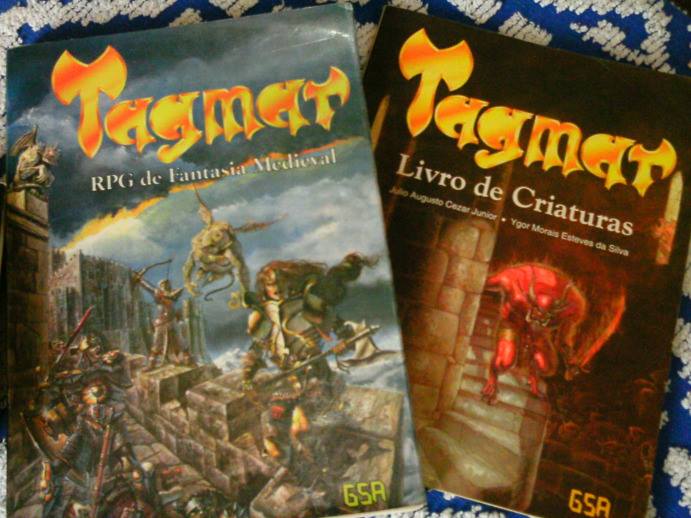
3d&t is one of the three big rpg systems from Brazil's 'Old School', together with Tagmar, (the Brazillian D&D), and Daemon (the Brazillian Gurps or Call of Cthulhu, per se). Those three were maybe the most influential and important to create and develop the brazillian's rpg picture and, in the future, I intend on reviewing them. For now, that's all folks. Tell me which weird rpgs you folks have.

Until then,
Valete!


Sunday, August 10, 2014

RPGaDay, favorite ingame fiction - 'Die, Vecna, Die!' or how Vecna "killed" the Old School

Classic adventure 'Die, Vecna, Die!'
- Marking the end of AD&D and the beginning of D&D 3rd edition -

Today, following the #RPGaDay, I will talk briefly about my favorite ingame fiction that I liked the most.

Out of them all, two come to my head. The first one is Time of Judgement, from White Wolf, whcih marked the apocalypse from the Old World of Darkness. Essentially, the book told the last stories regarding most of the many supernatural races in that setting (Werewolves, Fairies, Mages etc.).

However, my vote goes to Die, Venca, Die!, the last adventure of AD&D. It tells about how the supreme Lich Vecna tried to reshape the multiverse for his own whims. I talked about that in my postabout my favorite characters, and I reiterate: Vecna is the one who 'stole' Christimas...I say...'killed' the Old School and gave birth to the New School.

In the book, Vecna, after being able to freed himself  from Ravenloft, make plans in order to have the whole multiverse to be redone by himself. After being defeated by the players, he loses his post of Greater god and fall into lesser godhood. Nevertheless, the reflections of his plan hold on to the universe, altering many worlds e, basically, changing the rules from the 2 nd edition to the 3 rd new edition. It is a very good text to be read and all old school players should have a name to blame for the death of the 'old way'.

Joking aside, it's a very good read and I hope I enticed you guys to give it a try. And what about you? What is your favorite ingame fiction?

Until then,
Valete!


Everyone heil Vecna, the 'killer' of the Old School
and 'forefather' of the New School.


Link Images: 1, 2

Saturday, August 9, 2014

RPGaDay, favorite dice/set of dice - The One Ring and Battletech

At the picture, my favorite set dice: The One Ring and Battletech
- in the background, Aura -

Participanting at the #RPGaDay event, I will talk shortly about my favorite set of dice: the one from The One Ring rpg and the one from the Battletech box.

- The One Ring -

The One Ring rpg

The One Ring rpg uses 6d6 and 1d12 for its rolls. The 1d12 is the basic die to which are added a number of d6s related to the skill level the character has. It's a very elegant system and original, which I commented briefly at my Journey post and, in the future, I intend on giving it an overral review.


However, focusing only on the set dice, I love their design. The d6s have black numbers on the 4, 5 and 6; and white on the 1, 2 and 3. This has a mechanical reason behind: when the characters are fatigued, they ignore the white numbers, making rolling harder. This is one of the most eficient and simple ways to convey fatigue in a rpg system that I ever seen.

The d12 has numbers that go from 1 to 10, with the 11 being the Eye of Sauron and 12 being the Gandal rune. When Gandalf happens, it normally means automatic success or something good happening; when Sauron, it is something bad, and it can mean a critical failure. Because of that, this is one of the most amazing systems to have impressive and epic resolutions. I had players intimidating Spectres and seducing Vampires in reason of that.

In resume, one of the best games I've seen and one of the most beautiful set of dice I've layed my eyes upon.


- Battletech  - 

My Battletech box

Battletech dice
Now, talking about Battletech, it is a strategy wargame using Mechs. It has decades of history and compromising with its gigantic fanbase, and deserves a better analysis in another time from me. Talking solely about the dice, the system uses d6s for resolution. These 2d6 came with the box, and are my favorite ones. Simple, vivid and strong colors evoking the idea of war and battle. I like them very much

This was a short post, but I hope that you enjoyed it. Soon I will talk more.

Until then,
Valete!


Thursday, August 7, 2014

Rpg Reflections, The Journey (1) – How to make Traveling feel vivid and engaging?

Traveling, one of the central point of many a story
- How to make them engaging during a game -


(Summary TL;DR)

. Journeys are usually resolved in a very mechanical manner during rpg games, giving more importance to their logistics (distance, kind of mount used, movement rate of the party etc.) instead of focusing on their narrative aspects and possibilities for player interaction with the world.

. It is possible to create more engaging journeys by making the players participate directly with them, giving their characters explorer jobs (hunter, scout, watcher, guide) and making 'travel tests' in order to create scenes that deal with the tribulations of a journey.

><><

Few images in fiction are more evocative or instill the imagination more than travels towards distant lands, different people and forgotten realms (ha!). Be that in movies like Star Wars, in electronic games like Final Fantasy or in books as in the Lord of The Rings, the journey is one of the main troupes in every great saga.

However, in most rpg games, there are few or none discussions surrounding that subject, on how to make the Journey a crucial and essential point in an adventure. In most of the times, a journey becomes just the mechanical calculus of the different variables related to the journey: the distance to be threaded upon, the movement rate per day by the group, the supplies etc.

In the Dungeon Master guide of 2 nd edition AD&D, for example, there is an entire chapter dedicated solely to 'Time and Movement', detailing land movement, sea movement, the use of various kinds of mounts and even tips for how to make a calender ingame. However, there are no descriptions on how to create a scene of a journey similar to that we see in fiction, engaging and immersing into the game world. This kind of conduct repeats itself in many other rpg books – be they new or old.

Weird vistas and great opportunities for interaction
- Journeys are more than only survival tests -
At most, it is discussed on how to make survival rolls and random encounters. In regards to survival, everything boils down to a few dice roll to see if the characters are able to stay on route, gather food and things like that. Normally, such rolls have little to do with the main adventure, e works mostly as purely 'mechanical' than something to add to the story. In regards to random encounters, they try to simulate the unexpected events that may happen during a travel. Most of the time, they can be resumed to combat encounters – something similar to the style of electronic rpgs like Final Fantasy. However, some random encounter tables may have also natural disasters (rain, storms, land slides), social encounters (wandering traders and artists), hidden places (abandoned houses, lost ruins) and things like that.

Those two details – survival rolls and random encounters – add a little more life to travels; but they yet are not enough to engage truly the players. For the survival rolls are too mechanical and abstract and less endearing, and the random encounters are, at most, independent from the character's action and, therefore, feel 'detached' of feeling.

How so can it be done to emulate scenes that we see in fiction, like when, in The Hobbit, the dwarves were unable to light the bonfire. Or when in The Lord of the Rings, Sam and Frodo, together with Gollum, go towards Mordor crossing dangerous and impressive landscapes? Those scenes were more than just simple survival rolls and random encounters. They had a proper pacing and evocative imagery. Is it possible to simulate those in a mechanical point of view?

Here enters The Oner Ring, one of the first (maybe the first, but I'm not sure) rpgs to deal with Journeys with as much importance to an adventure as Combat Encounters or Social Encounters. The system mechanics try to emulate exactly that kind of journey seen in those books and in other works of fiction – both the logistics side of it and the narrative one.

Adventurers meet a maiden near the forest
- Traveling can be a source of curious interactions -
Resuming in a few words, The One Ring journey system requires that the group decides the path that they will take and count the number of days that the travel will take. Based on the total of days on the road, the system establishes a number of 'Travel Rolls' that the group must do during the journey. These travel rolls are similar to the survival rolls with other systems, where the challenge rating depends on how dangerous and hostile is the place which the characters travel through.


Knowing how many travel rolls are needed, the group must decide which character will fill the exploratory jobs of hunter, scout, watcher and guide. With all set, each character makes their travel roll. Each one of those rolls represent not one day of travel, but a part of the whole journey. With the result of those rolls, the GM may invoke a happening, either a complication (if the rolls were bad) or something good (if the rolls were very successful).

For example, supposing that the players want to make a journey through a mountain pass, which will take 10 days and need 3 travel rolls. In the travel roll, the hunter fails. So the GM look upon the table of complications derived from a failed hunt roll and he may either chose one or random roll it. It may be that the hunter was targeting a deer that a mountain lion was also interested with, and the lion attacks the hunter. Or maybe the prey that he got was ill and all characters must make a saving throw against poison. Now, on the second travel roll, let's say that the guide roll a critical success. The GM may now choose a good happening related to the guide, and say that they found a passage through the mountains – an old tunnel. After a little bit of exploration through ancient forgotten ruins of a dwarven settlement, the group is able to transverse the mountains, shortening the travel and needing only 2 travel rolls instead of 3.

Travel rolls alow interaction with the game world
(Forest Bridge, by Pavel Elagin)
As it can be seen, this makes the Journey much more interesting for the players and the GM. Different from the generic Survival tests, each character happen to contribute to the game. Instead of random events disassociated with the rolls, those are motivated directly by what each character does. Traveling becomes a crucial part of the adventure and the GM has the chance to create vivid depictions of land, people, weather, making the experience more immersive for all.

And what about you? Have you tried the mechanics of The One Ring, or have you did something similar in your games? How have you been dealing with journeys? I hope this post helps showing different ways to make traveling more exciting. I intend, in the future, elaborate more about the details of it and how to adapt that system to other rpgs.

Until then,
Valete!


Monday, August 4, 2014

Age of Legends 1 - Introduction to the project

The classic PC game 'Age of Empires'
One of the great inspirations for my Age of Legends rpg
(Summary TL;DR)

. The Age of Legends (AoL) is a rpg project whose idea is to emulate the sagas and heroes of classic texts, while using the historical Earth as its setting, maintaining the mythological, magical and divine elements.

. The basic setting would occur during the Colapse of the Bronze Age (~1300-900 BC), the same period of the War of Troy, the Invasion of the Dorian and other legendary events.

. The system will be inspired by Old School rpgs, specially AD&D and OD&D.

><><

So, it is time to present the Age of Legends, the project which I've been dedicating myself in the last couple weeks (and that, I must point out, was the motivation for me to create this blog).

My idea with Age of Legends is to create an old school rpg with the structure of the epics and sagas of yore, using as inspiration its classic literature – be it mythological or religious, new or old –, like the Iliad and Odyssey; the Japanese Kojiki; the Indian Mahabarata; the Summerian Gilgamesh; the Egyptian Am-Tuat; the Nordic Volsung Saga; the Portuguese Lusiads; the Old Testament and the Torah; the Beowulf; the Irish Lebor Gébala Érenn; and many, many more.

It's true that this proposal already exists in other rpgs, like Slaine d20, using the celtic mythology; the Testament d20, using the Old Testament; the Arrows of Indra, using the Mahabarata; and the Spears of the Dawn, using African mythology and religion. Even D&D does a similar thing, basing its games around the european mythology of knights (as with the settings of Dragonlance, Grayhawk, Forgotten Realms and Birthright). With so many games doing a similar thing, what Age of Legends would bring of new to the table?

The main difference is in the fact that all those rpgs which I have presented used such classic tales in order to create a new fantastic world that, although similar, it's different from our own. And that is the proposal of Age of Legends: instead of creating new cities, countries, lands and people inspired by the classical texts, it would be based upon historical Earth.

Yes, there would be some reservations. It would be the historical Earth based on mythology and legend, with magic and gods. The same Earth that we read in old tales; where Heracles went to hell to capture Cerberus; where Circe transformed sailors into pigs; where the bards of the Tuatha de Danaan threw fireballs with their songs; where Moses was able to part the Red Sea; where Amaterasu herself allowed Jimmu to fund the Empire of Japan.

I know that this could be a very delicate point, mixing so many different beliefs, specially when dealling with religious texts like the Bible and the Torah. But my intention is not to create friction, nor is it to attack or discredit any religion. I just want to create the possibility for amazing stories, and the idea of creating, for example, an Israelite hero, capable of convoking the help of Angels and pronounce sacred psalms would be amazing.

So, that is the proposal of Age of Legends: create a game using mythological and historical Earth as its setting which, even though fantastic and supernatural, it would still be our Earth, with thousands of years of history, texts, languages, music, arts, empires, people and civilizations that Game Masters and Players would be able to search and use in their campaigns. I will be posting more regarding the project, my choice with the system, the setting and the overall tone of the game.

Until then,


Valete!